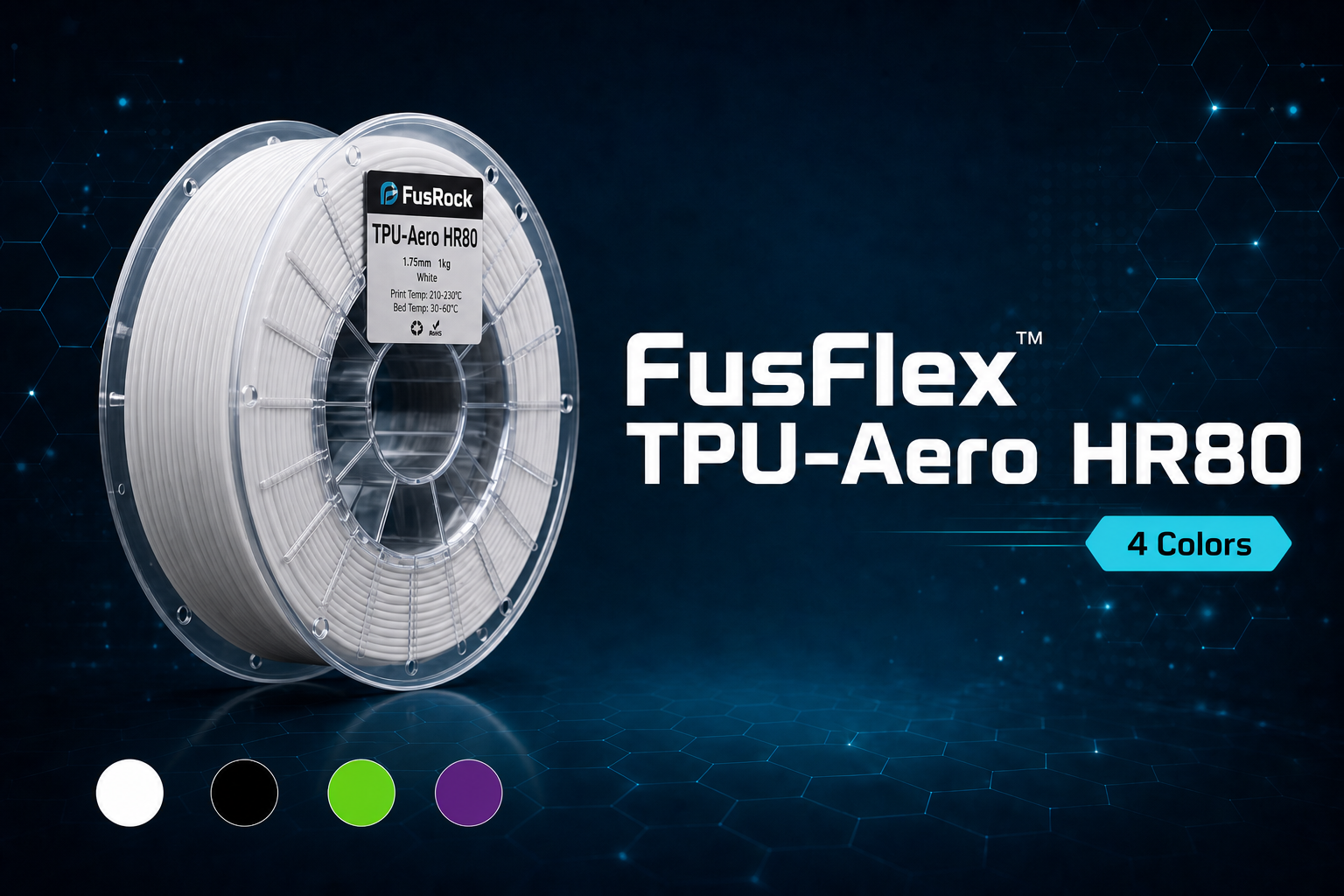
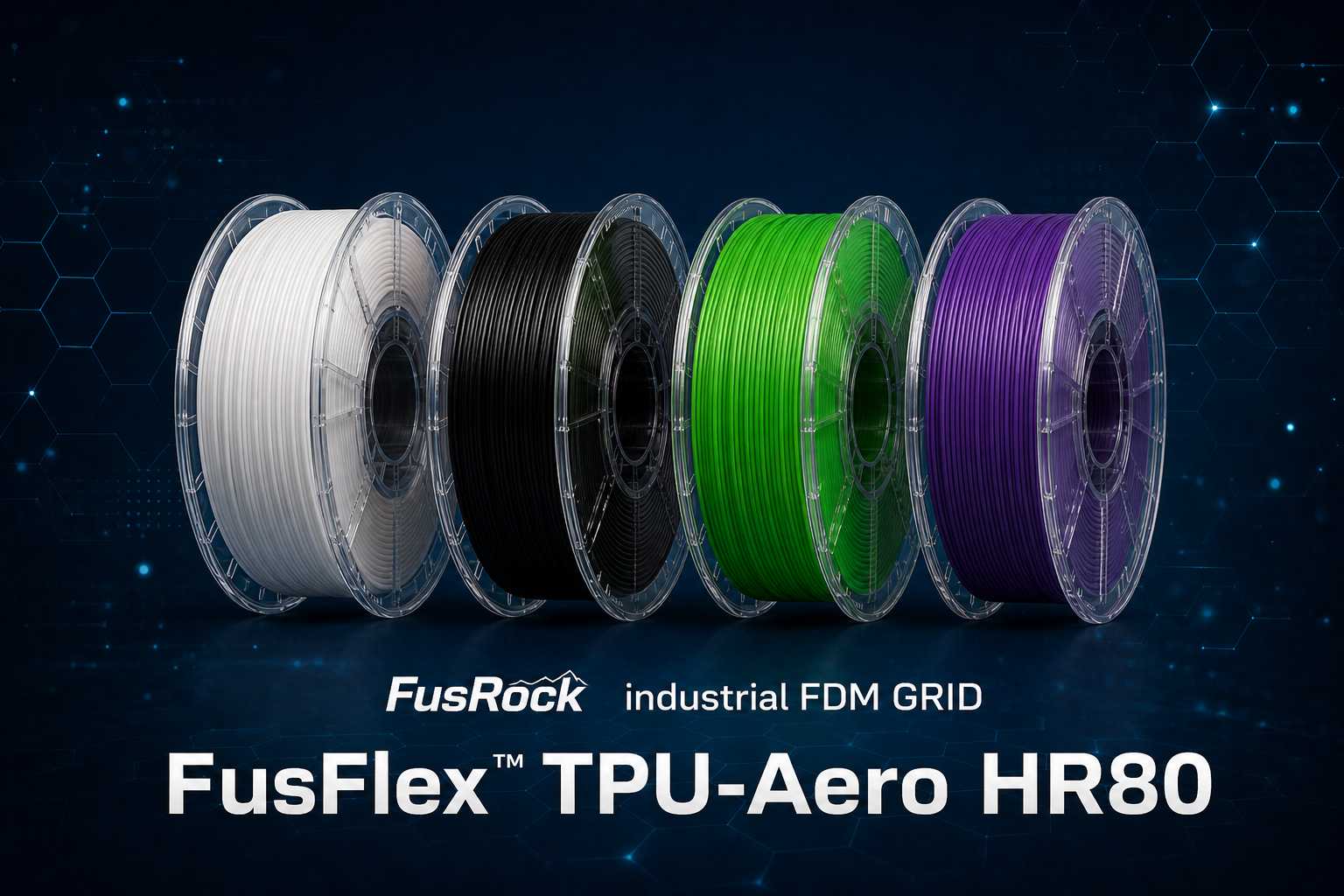
Synced from Product Parameters V2: Basic & Appearance
| PropertyTesting methodTypical valueDensityISO 11831.19 g/cm³HardnessISO 761990AMelt index200°C,2.16kg22 g/10minVicat softening temperatureISO 30695°CTensile breaking strength (X-Y)ISO 52728.12±3.26 MPaelongation at break (X-Y)520±51 %tensile stress at 100% (X-Y)8.55±0.32 MPatensile stress at 200% (X-Y)10.26±0.14 MPatensile stress at 300% (X-Y)14.38±0.55 MPaSpecimens printed under the following conditions: Nozzle size 0.4mm,Nozzle temp 210°C, Bed temp 50°C, Print speed 60mm/s, Infill 100%, Infill angle ±45° | Recommended printing conditions |
|---|---|
| Additional Suggestions:1.If you want to achieve high-speed printing, it is recommended to use direct extruders, such as BMG extruder, Titan extruder and Hemera extruder, and appropriately increase the nozzle temperature.2.TPU material is very easy to absorb moisture when exposed to air, and printing after absorbing moisture will result ozzing, extruding with bubbles and rough surface appearance, thus reducing print quality. It is recommended that put the filament into a dry box (humidity below 15%) immediately after opening the FusFlex™ TPU90A-HF vacuum foil bag for printing. Please put the unused filament back into the original aluminum foil bag for sealed storage.3.After the material is damp, there will be more printing ozzing, bubbles extruded and rough printing surface. Please dry the filament in an oven at 70-80℃ for 4-6h to restore the printing quality of FusFlex™ TPU90A-HF. | FAQ |
| Most frequent questions and answers | Size specifications of 1KG consumables? |
| Disclaimer | Fusrock® 3D printing filaments are suitable for general printing applications and have been tested under standard conditions. However, the performance and safety of printed products are influenced by multiple factors, including printing parameters, model design, operating environment, and intended use. By using Fusrock® materials, users acknowledge and agree to independently evaluate the suitability of printed items for their specific applications and assume all associated risks. Fusrock® shall not be held liable for any damages, injuries, or losses resulting from the practical use of products printed with its materials, including but not limited to structural failures, malfunctions, or safety hazards in operational environments. Thorough testing must be conducted before applying printed components to critical, functional, or commercial scenarios. Fusrock® products are not certified for medical, aerospace, or life-support systems, except for certifications explicitly stated by Fusrock® for specific materials. |
| Related Articles | All |
| Additional Suggestions:1.If you want to achieve high-speed printing, it is recommended to use direct extruders, such as BMG extruder, Titan extruder and Hemera extruder, and appropriately increase the nozzle temperature.2.TPU material is very easy to absorb moisture when exposed to air, and printing after absorbing moisture will result ozzing, extruding with bubbles and rough surface appearance, thus reducing print quality. It is recommended that put the filament into a dry box (humidity below 15%) immediately after opening the FusFlex™ TPU90A-HF vacuum foil bag for printing. Please put the unused filament back into the original aluminum foil bag for sealed storage.3.After the material is damp, there will be more printing ozzing, bubbles extruded and rough printing surface. Please dry the filament in an oven at 70-80℃ for 4-6h to restore the printing quality of FusFlex™ TPU90A-HF. | FAQ |
|---|---|
| Most frequent questions and answers | Size specifications of 1KG consumables? |
| Disclaimer | Fusrock® 3D printing filaments are suitable for general printing applications and have been tested under standard conditions. However, the performance and safety of printed products are influenced by multiple factors, including printing parameters, model design, operating environment, and intended use. By using Fusrock® materials, users acknowledge and agree to independently evaluate the suitability of printed items for their specific applications and assume all associated risks. Fusrock® shall not be held liable for any damages, injuries, or losses resulting from the practical use of products printed with its materials, including but not limited to structural failures, malfunctions, or safety hazards in operational environments. Thorough testing must be conducted before applying printed components to critical, functional, or commercial scenarios. Fusrock® products are not certified for medical, aerospace, or life-support systems, except for certifications explicitly stated by Fusrock® for specific materials. |
| Related Articles | All |
| TPU90A-HF | A 3D printed unicycle sports brace based on TPU90A |
| Manufacturing and R&D | Others | TPU90A-HF | FUSE REALROCK FUTURE |
No matching print profile files.
Synced from the linked Product Parameters V2 record — use as a starting point for slicing and test prints.
Core temperature, speed and cooling settings from Product Parameters V2.
Nozzle, build plate and pre-print preparation recommendations.
Support material, spacing and compatible material recommendations.
No FAQs for this product yet.
General safety (FusRock)
| How to route filament |
|
||
|---|---|---|---|
| Moisture control |
|
| Short breaks | Store in a sealed dry box or apply a simple vacuum pack; avoid direct sunlight. |
|---|---|
| Long-term storage | Return filament to the factory foil bag, squeeze out air (add a fresh desiccant pack if available), then place inside a household vacuum bag and pull vacuum. Keep in a cool, dry place away from sunlight. |
PTC compact dryer box: 60–70 °C for 4–6 hours.
Small lab oven (forced-air): temperature uniformity is often limited; spools can warp. Reduce temperature/time (example: 40–45 °C for ~4 hours) and cross-check the material-specific drying notes in the datasheet.
Important: if print quality does not improve, test with an empty spool before raising temperature—non-uniform heat can deform plastic flanges.
Large forced-air oven: 60–70 °C for 4–6 hours.
PS: Why do devices differ? Add an internal article or external link (“learn more”).
⚠ Read before drying
(Insert “warped vs normal” spool photos here.)
What moisture does to prints
| Dry | Damp |
|---|---|
| Cleaner surface, stable color, mechanical properties on spec | Pitting, stringing, whitening, weaker properties (material dependent) |
(Optional: 1 / 2 / 3 day exposure at ~80% RH — same test part.)
* Example photos may reference a specific grade (e.g. PAHT-CF); label yours accordingly.