Produtos

Série FusFree

S-Multi

S-Multi

FusFree™ S-Multi Quick-Remove Support Material can achieve fast and easy peeling by adjusting the bonding strength to the support surface of the body material and the bonding strength of S-Multi itself. S-Multi Quick-Remove Support Material does not
- HDT-A / degC
- HDT-B / degC
- Young's Modulus / MPa
- Tensile Strength / MPa
Diameter1.75mm Weight2.5kg / 3kg
Spool Info
  • Specifications
  • Print profile downloads
  • Parâmetros de impressão
  • Related downloads
  • Application cases
  • FAQ
  • Health tips
  • Moisture handling & storage
  • Application disclaimer
  • Statements & copyright
carregando características funcionais do material (tabela de propriedades físicas versus radar)... / Loading filament properties & radar…
PRODUCT PARAMETERS V2

FusFree™ S-Multi

Synced from Product Parameters V2: Basic & Appearance

Product Name FusFree™ S-Multi
Product Model S-Multi
Forming Process Filamento compatível com FDM
Color / Appearance 纯色(Natural)、黑色(Black)
Package Weight 2.5 kg / 3 kg
Filament Diameter 1.75 mm
Brand FusRock
Supplier FusRock

Material Properties

dicas de impressão

dicas de impressão: S-Multi very easy to absorb moisture within the environment, and printing after absorbing moisture will result ozzing, extruding with bubbles and rough surface appearance, thus reducing print quality. It is recommended that put the filament into a dry box (humidity below 15%) immediately after opening the  S-Multi vacuum foil bag for printing. Please put the unused filament back into the original aluminum foil bag for sealed storage.After the material is damp, there will be more printing ozzing, bubbles extruded and rough printing surface. Please dry the filament in an oven at 80-100℃ for 4-6h to restore the printing quality of  S-Multi.It is recommended to use hardened steel and above grade nozzles made by Phaetus, which can effectively improve the print quality. Besides, it is recommended that the thickness of the heating block is longer 12mm.In dual-extruder printing mode, the material in the standby nozzle will deteriorate due to prolonged heating, and the deteriorated material needs to be squeezed out before the print nozzle is switched, so it is necessary to use the Wipe wall or Wipe tower function in the slicing software.After the printing is completed, the pri

  • Document type
  • Version
  • Time
  • Action
  • TDS
  • 4.1
  • 2025-01-01
  • No matching print profile files.

    PRODUCT PARAMETERS V2

    Parâmetros de impressão

    Valores sincronizados do perfil de produto V2 associado — ponto de partida para fatiar e testes de impressão.

    Printing Window

    Core temperature, speed and cooling settings from Product Parameters V2.

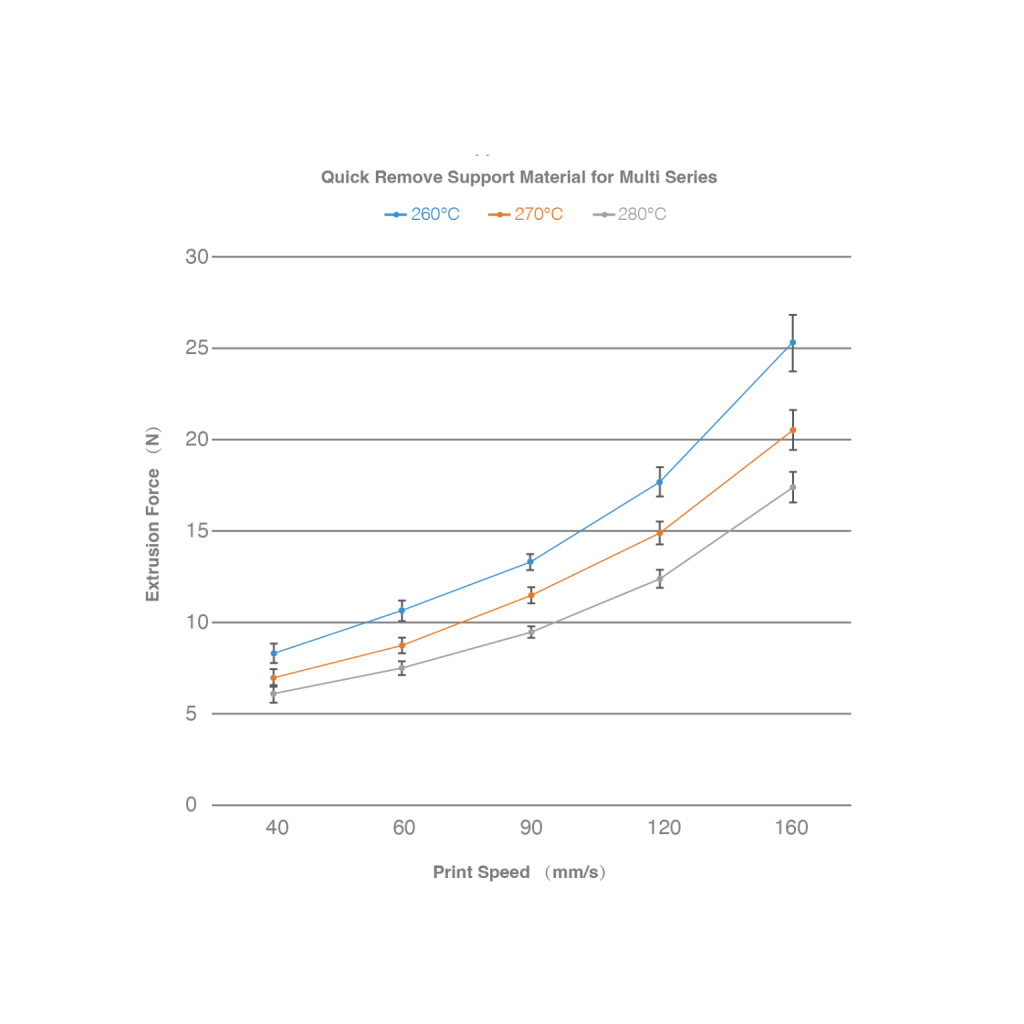
    Nozzle Temperature 260 - 280 °C
    Bed Temperature 70 - 90 °C
    Print Speed 30 - 120 mm/s
    Suggested Nozzle 0.4 - 1 mm

    Hardware & Platform

    Nozzle, build plate and pre-print preparation recommendations.

    Nozzle Material Recomenda-se o uso de aço endurecido e bicos acima do nível
    Build Plate Material Revestimento com cola PVP
    Enclosure Printing Não é necessário ter um recinto. Se estiver usando uma impressora fechada, ative a ventilação da câmara para evitar o entupimento do bico.

    Support & Compatibility

    Support material, spacing and compatible material recommendations.

    Retraction 0.6 - 2 mm
    Retraction Speed 30 - 60 mm/s
    Support Density 15 - 20 %
    Support Dense Layer Thickness 3 - 5 mm
    Support XY Distance 0.3 - 0.6 mm
    Support Border Loops 1 loops

    Notes

    Additional guidance maintained in Product Parameters V2.

    Other Suggestions FusFree™ S-Multi é muito fácil de absorver umidade no ambiente, e imprimir após absorver a umidade resulta em ozzing, extrudação com bolhas e aparência áspera da superfície, reduzindo assim a qualidade da impressão. Recomenda-se colocar o filamento em uma caixa seca (umidade abaixo de 15%) imediatamente após abrir o saco de alumínio FusFree™ S-Multi para impressão. Por favor, coloque o filamento não usado de volta no saco original de papel alumínio para armazenamento selado. Depois que o material fica úmido, haverá mais ozzing de impressão, bolhas extrudidas e superfície de impressão áspera. Por favor, seque o filamento em um forno a 80-100°C por 4-6 horas para restaurar a qualidade de impressão do FusFree™ S-Multi. Recomenda-se o uso de aço endurecido e bicos acima do nível fabricados pela Phaetus, que podem melhorar efetivamente a qualidade da impressão. Além disso, recomenda-se que a espessura do bloco de aquecimento seja maior, 12mm. No modo de impressão com extrusor duplo, o material do bico de reserva se deteriora devido ao aquecimento prolongado, e o material deteriorado precisa ser espremido antes que o bico de impressão seja trocado, por isso é necessário usar a função Wipe wall ou Wipe tower no software de fatiamento. Após a conclusão da impressão, a peça impressa pode ser recozida e, em seguida, a etapa de remoção FusFree™ S-Multi pode ser realizada. Durante o processo de recozimento, o FusFreeTM S-Multi pode desempenhar o papel de sustentar o material do corpo, reduzindo a deformação dimensional do material do corpo e melhorando as propriedades mecânicas do material do corpo. Condições de recozimento: ajustadas de acordo com as necessidades do material da carroceria.

    No solution entries for this product yet.

    No FAQs for this product yet.

    通用安全提示(FusRock)

    1. 长期大量使用 3D 打印材料时,建议在专用房间操作并保持通风。
    2. 有过敏史者请确认所用材质不会引发过敏反应。
    3. 有呼吸道慢性病者请佩戴口罩;其他人员也强烈建议操作时佩戴口罩。
    4. 对纤维类打印件进行打磨、切割等可能产生纤维逸出的操作时,请做好防护,避免刺入或吸入。
    5. 打印时请远离儿童与婴幼儿,注意环境安全。

    Storage (moisture protection)

    *Recommended printing Condições
    Short breaks Store in a sealed dry box or apply a simple vacuum pack; avoid direct sunlight.
    Long-term storage Return filament to the factory foil bag, squeeze out air (add a fresh desiccant pack if available), then place inside a household vacuum bag and pull vacuum. Keep in a cool, dry place away from sunlight.
    Drying damp filament — guidelines
    Drying parameters

    PTC compact dryer box: 60–70 °C for 4–6 hours.

    Small lab oven (forced-air): temperature uniformity is often limited; spools can warp. Reduce temperature/time (example: 40–45 °C for ~4 hours) and cross-check the material-specific drying notes in the datasheet.

    Important: if print quality does not improve, test with an empty spool before raising temperature—non-uniform heat can deform plastic flanges.

    Large forced-air oven: 60–70 °C for 4–6 hours.

    PS: Why do devices differ? Add an internal article or external link (“learn more”).

    Precautions

    Read before drying

    1. When in doubt, run an empty-spool temperature trial before increasing heat.
    2. Follow the recommended temperatures/times from the product / material admin page.
    3. Prefer forced-air ovens; do not blast the spool directly with hot air.
    4. Avoid exposing the spool edge to a violent air jet.
    5. Do not rest spools only on wire racks—use a flat heat-spreading plate if needed.
    6. Hot spools can burn—use gloves.
    7. Observe fire and electrical safety.
    8. Avoid microwave ovens or other uneven heaters; a temperature-controlled drying oven is preferred.

    (Insert “warped vs normal” spool photos here.)

    Dry vs damp

    What moisture does to prints

    DryDamp
    Cleaner surface, stable color, mechanical properties on specPitting, stringing, whitening, weaker properties (material dependent)

    (Optional: 1 / 2 / 3 day exposure at ~80% RH — same test part.)

    * Example photos may reference a specific grade (e.g. PAHT-CF); label yours accordingly.

    Contact form

    Enviar