Synced from Product Parameters V2: Basic & Appearance
| Recommended printing conditions | Temperature250-270° epaisseur recommandés de 0,4 à 1,0 mmsurface de construction glueBuild plate temperature100-110°CChamber TempSealing or 40-70°CCooling fan speed0-20%Print speed30-120 mm/sRetraction distance1-3 mmRetraction speed1800-3600 mm/minRecommended Support MaterialFusFree™ S-Multi Quick-Remove SupportDrying setting70℃ for 4-6hAnnealingN/A |
|---|
| Nozzle Temperature250-270° Nozzle recommandé diametre 0,4-1,0 mmrecommandé traitement de surface ou revêtement avec PVP gluecomposition température de la plaque 100-110° cchambre TempSealing or 40-70°CCooling fan speed0-20%Print speed30-120 mm/sRetraction distance1-3 mmRetraction speed1800-3600 mm/minRecommended Support MaterialFusFree™ S-Multi Quick-Remove SupportDrying setting70℃ for 4-6hAnnealingN/A |
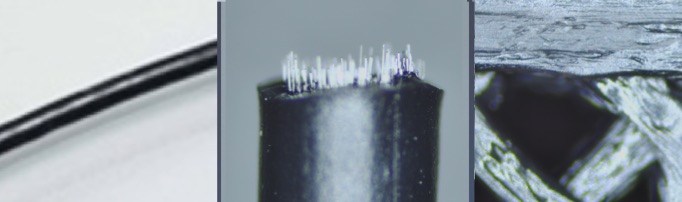
conseils d’impression: FusCoating™ NexABS-GF25 has a higher fiber content compared with ordinary ABS-GF. This technology further improves the warping resistance and rigidity of ABS materials, so the chamber temperature can be properly reduced to achieve energy saving.If the filament has been opened for a long time and problems such as air bubbles and stringing appear during the printing process, please dry the filament at 70°C for 4-6 hours.It is recommended to place the printer in a well-ventilated environment when printing with ABS material.FusCoating™ NexABS-GF25 can maintain a core-skin structure when extruded from the nozzle. It is based on the mechanism that the melt polymer is in a laminar state when it flows stably, However,when the printing speed is too high, the melt flow state will become unstable, and the filaments extruded from the nozzle will no longer have the skin-core structure anymore, which can cause the rough surface of the printed part. When this phenomenon occurs, it is recommended to increase the printing temperature or reduce the extrusion speed.It is recommended to use Phaetus hardened steel nozzles or nozzles with greater abrasion resistance,which can effectively i
No matching print profile files.
Valeurs synchronisées depuis le profil produit V2 associé — point de départ pour le slicing et les essais d’impression.
Core temperature, speed and cooling settings from Product Parameters V2.
Nozzle, build plate and pre-print preparation recommendations.
Support material, spacing and compatible material recommendations.
FusRock 3D printing materials in the Industrial Parts segment, illustrated by “Daily accessories or industrial parts storage box”, balancing structural strength, print fidelity and field reliability.
FusRock 3D printing materials in the Tabletop Games segment, illustrated by “Customized mechanical keyboard”, balancing structural strength, print fidelity and field reliability.
No FAQs for this product yet.
通用安全提示(FusRock)
| 短期不使用时 | 放入密封防潮盒或进行简易抽真空即可,避免阳光直射。 |
|---|---|
| 长期不使用 | 将耗材放入出厂铝箔袋并尽量排出袋内空气(条件允许时在袋内再放一包干燥干燥剂);外套一层家用抽真空保鲜袋后抽真空。置于阴凉干燥处,避免阳光直射。 |
PTC 小型烘干盒:60–70℃,烘干 4–6 小时。
小型恒温鼓风烘干机:箱内温度场往往不均匀,可能导致料盘变形;此类设备上建议适当降低温度并缩短单次烘干时间(示例:40–45℃,约 4 小时),并结合材料详情中的干燥建议综合判断。
重要:若按此温度烘干后打印效果仍无改善,请先用空料盘做温度测试,再酌情提高烘干温度,以防温度过高或不均匀导致料盘烘干变形。
大型恒温鼓风烘干机:60–70℃,烘干 4–6 小时。
PS:为什么不同烘干设备适用温度会有差别?可在后台插入说明或外链「点击了解」。
⚠ 操作前请阅读
(可插入「变形 vs 正常」料盘对比照片,注意控制烘干温度与摆放方式。)
耗材受潮的影响
| 未受潮 | 受潮 |
|---|---|
| 表面相对整洁、颜色正常、力学性能在规格内 | 可能出现痘痕/毛刺/拉丝、颜色发白、力学性能下降等(因材料而异) |
(可插入 RH80% 环境下拆封后第 1 / 2 / 3 天打印同一模型的对比图。)
* 上述吸湿对比示例可能因产品系列而异(例如 PAHT-CF),请在插入图片时于脚注中注明材料系列。